Helping customers find value in their weekly shop in a mobile-first environment.
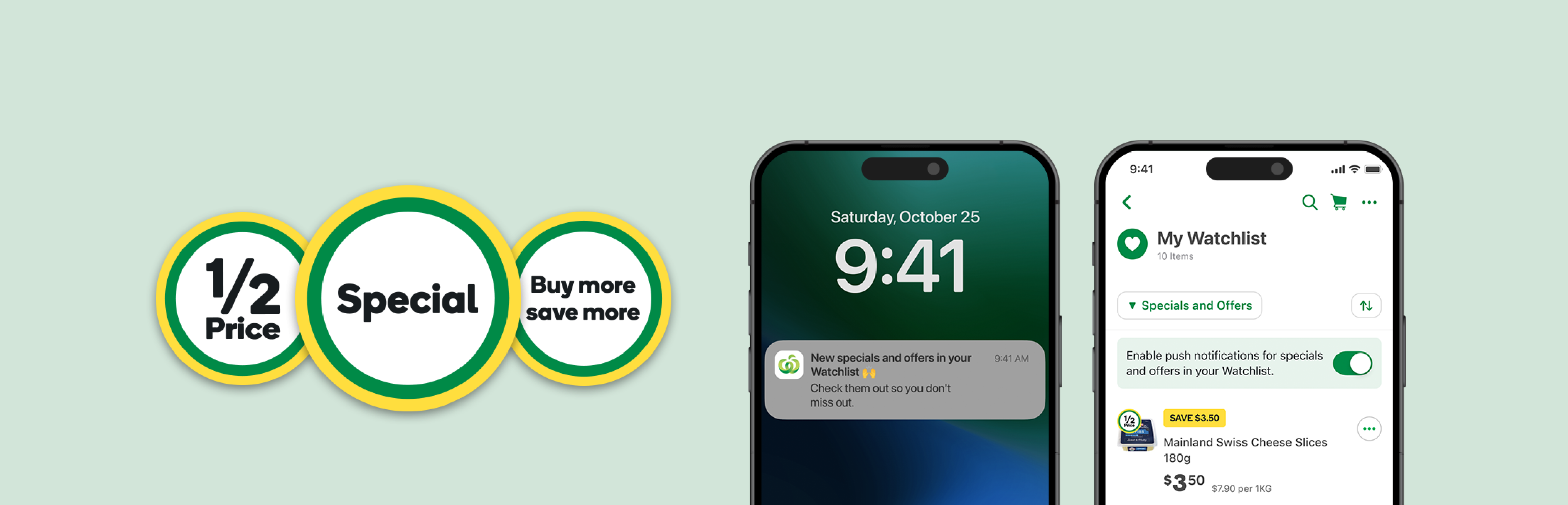
Due to the cost of living crisis post-covid, Australians were looking for ways to get more value from their weekly shop. Customers were also frustrated with not being able to purchase items that were out of stock. We hypothesised that a Watchlist can solve for these pain points as it allowed customers to monitor products and receive alerts for when they are back in stock, on special or have rewards offers. Aligned with Woolworths' mobile-first strategy and due to the reliance on push notifications, Watchlists were planned exclusively for the mobile apps.

I took ownership of the Watchlist initiative partway through its lifecycle as a result of a company restructure. My focus was on creating clarity, momentum and confidence across design and delivery. Key contributions included:
I inherited a well-researched problem space and leveraged existing insights to accelerate design delivery without re-running studies. Key insights that shaped the direction of Watchlists:
When I joined the project, design exploration had expanded beyond Watchlists into redefining the broader 'save to list' experience. While this direction had potential, it would have required fundamental changes to both the app architecture and the user experience which would have prolonged the time needed to deliver Watchlist to production. To reduce development risk while delivering customer value sooner, we descoped the broader list redesign. Following a technical review, we also descoped alerting customers to reward offers within their Watchlist and deferred them to a potential future iteration.
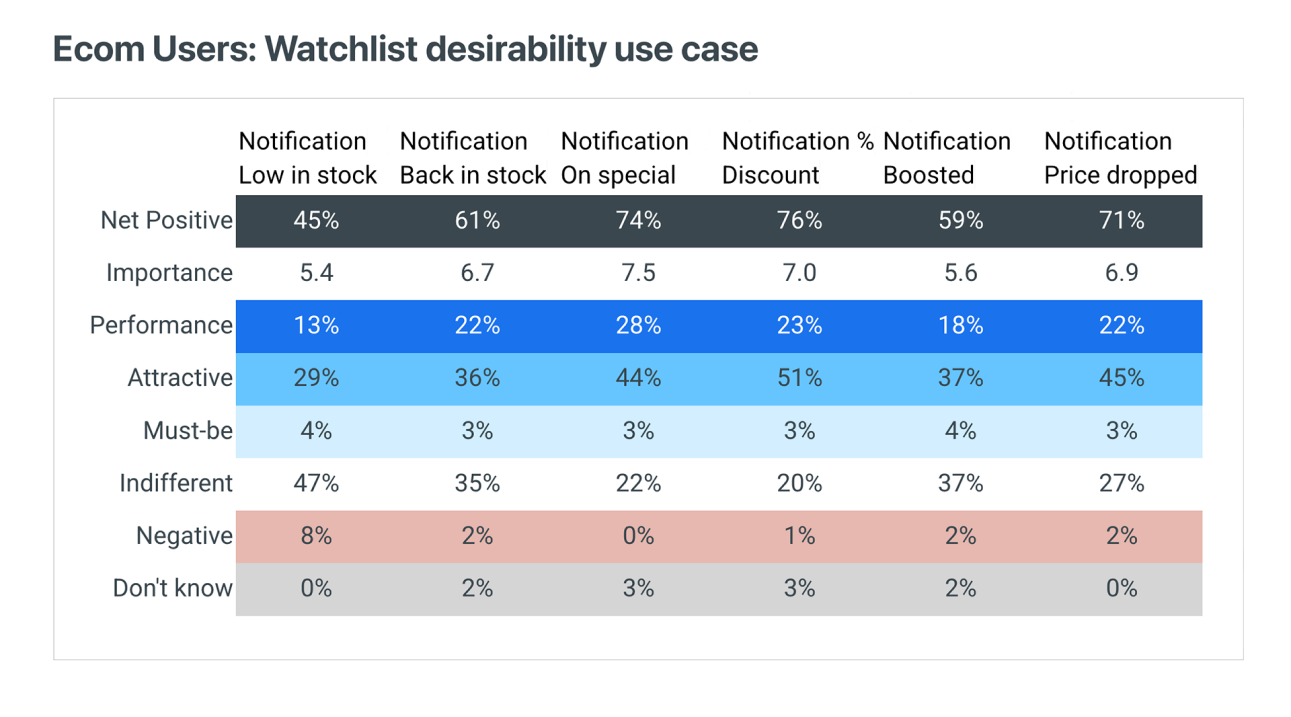
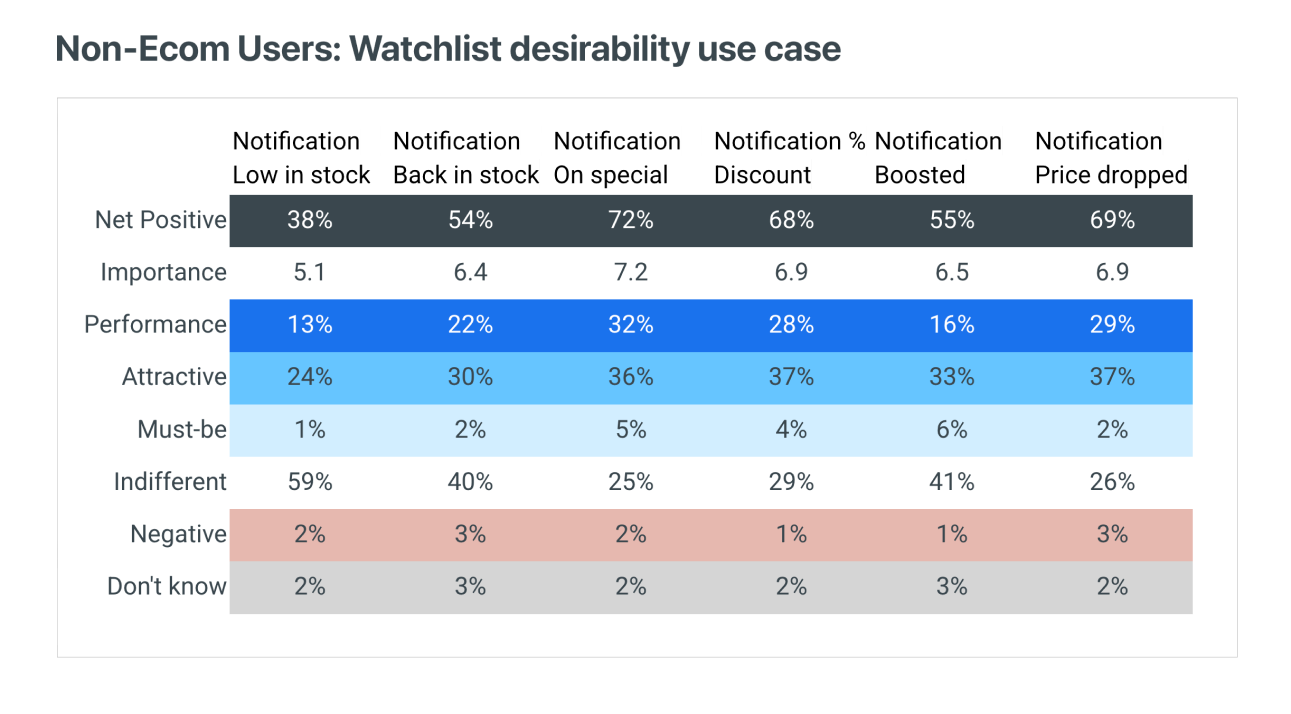
Further design exploration and UX research revealed that customer requirements for back-in-stock alerts differed fundamentally from those for specials alerts. In particular, customers wanted back-in-stock notifications to be specific to the stores and fulfilment methods they regularly use. Supporting both alert types would have introduced additional complexity into Watchlist, making it more appropriate to decouple them. To further reduce scope, we chose to focus on delivering specials alerts within Watchlist. This decision was supported by earlier research showing that back-in-stock alerts scored lower in desirability than specials alerts.
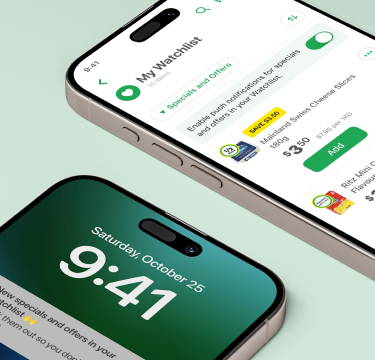
The final Watchlist experience enables customers to:
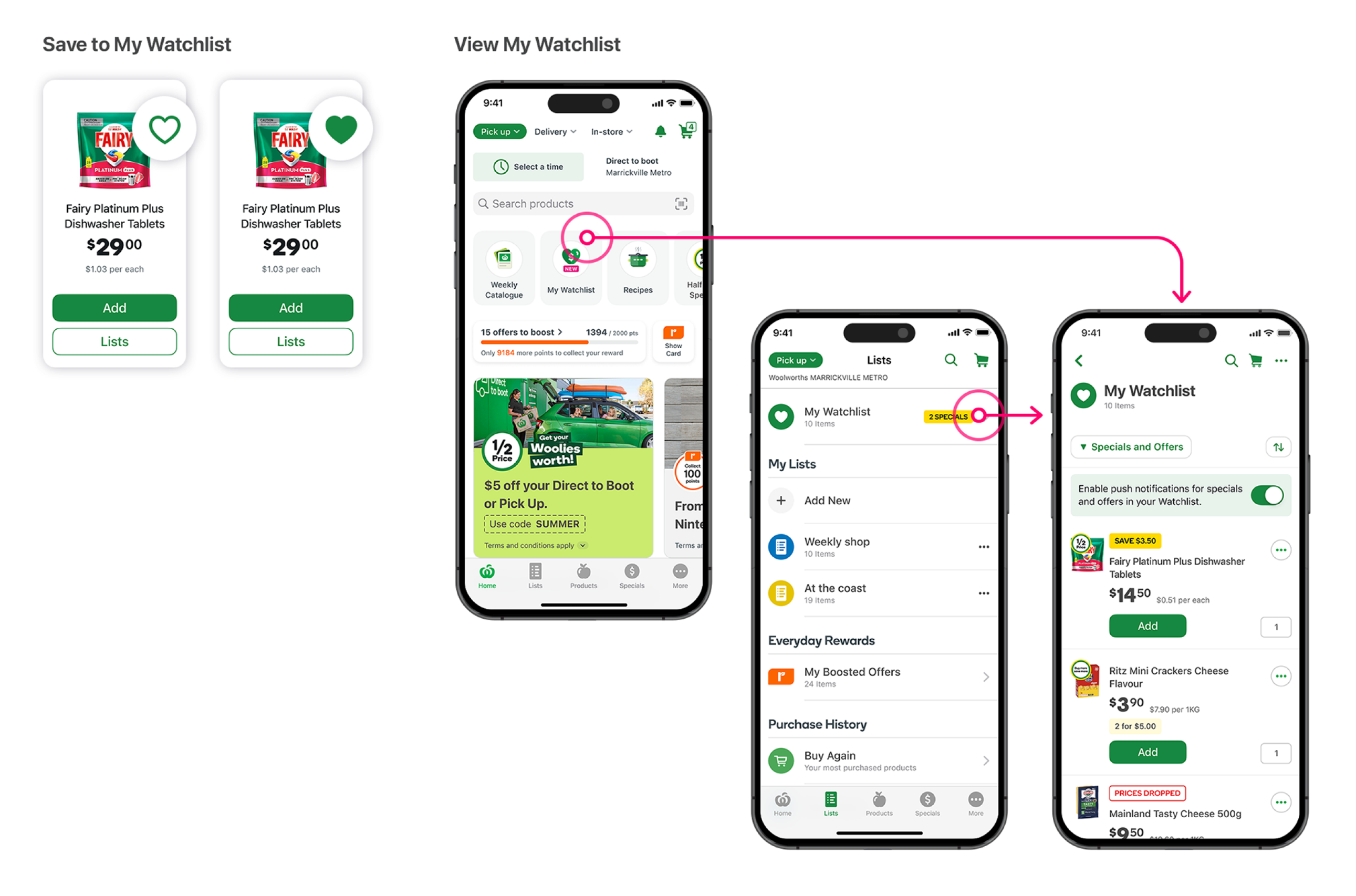
Watchlist users consistently outperformed non-Watchlist users across three key eCommerce metrics:
Compared with 7.14% for non-Watchlist users
Compared with $194 for non-Watchlist users
Compared with 44.4 for non-Watchlist users
Over a one-year period, the feature contributed $17.4m in directly attributed product revenue and $94.7m in total influenced online revenue, driven by over 100k weekly active users engaging with the feature every week.
Inheriting this project mid-stream reinforced the importance of good design being as much about restraint as it is about execution. By reassessing scope early, grounding decisions in existing research and clearly articulating trade-offs to stakeholders, we were able to ship something meaningful without over engineering it.
What surprised me post launch was how customers were actually using Watchlist. Fresh produce and weekly staples dominated the top 10 items added to cart from the Watchlist. This revealed that the feature had evolved beyond its original specials tracking intent into a broader weekly shopping utility. That's a distinction worth designing for in future iterations.