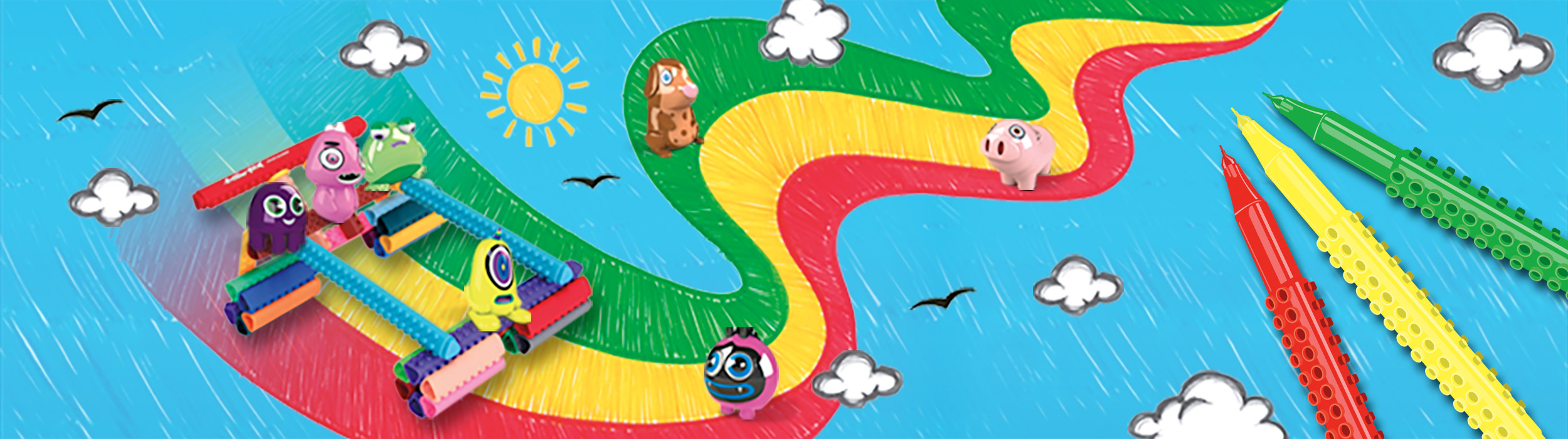
An informative and inspiring digital presence to support the launch of a new Artline product range.
Artline launched a new children’s product range called Artline Stix, a differentiated offering within the stationery and toy market. The range included pens, toys and connectors that could be joined together to create custom builds. As this was a new and unfamiliar product concept, a dedicated website was required to introduce Artline Stix, explain how the components worked together and demonstrate how children could use the products to draw, build, and play.
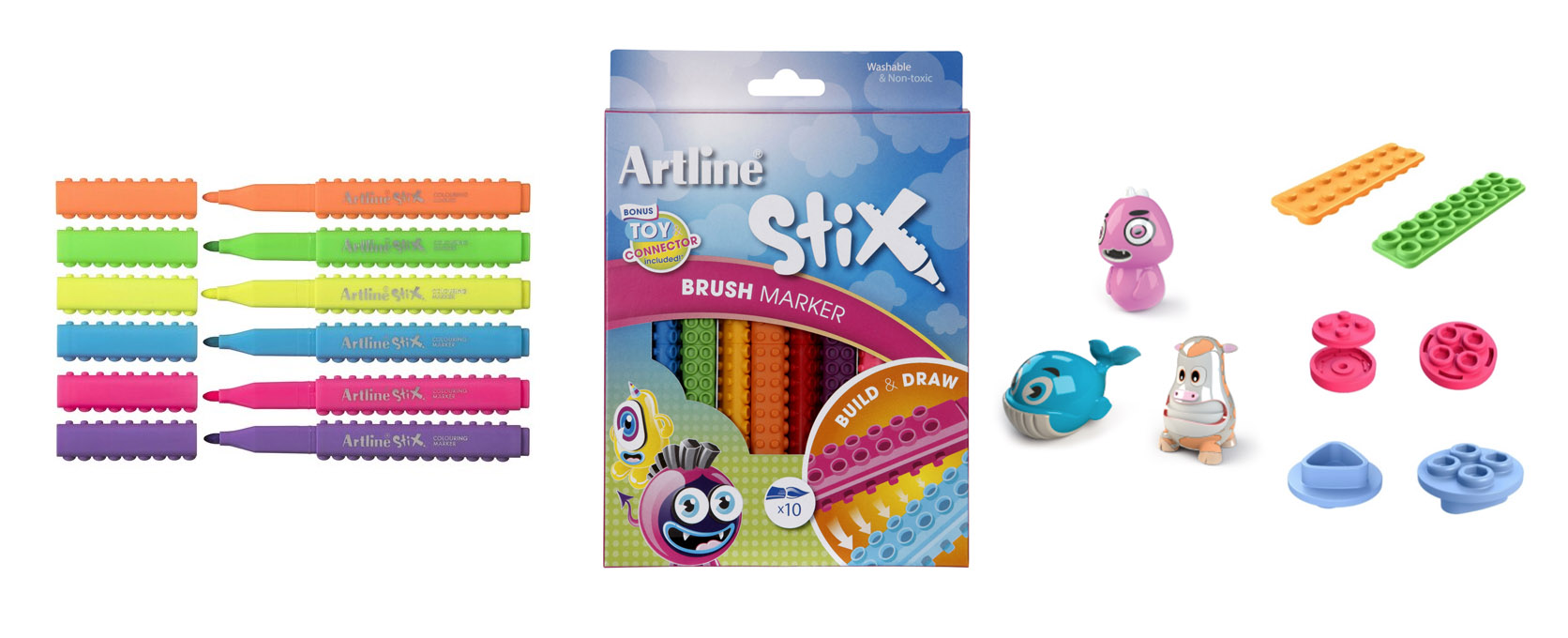
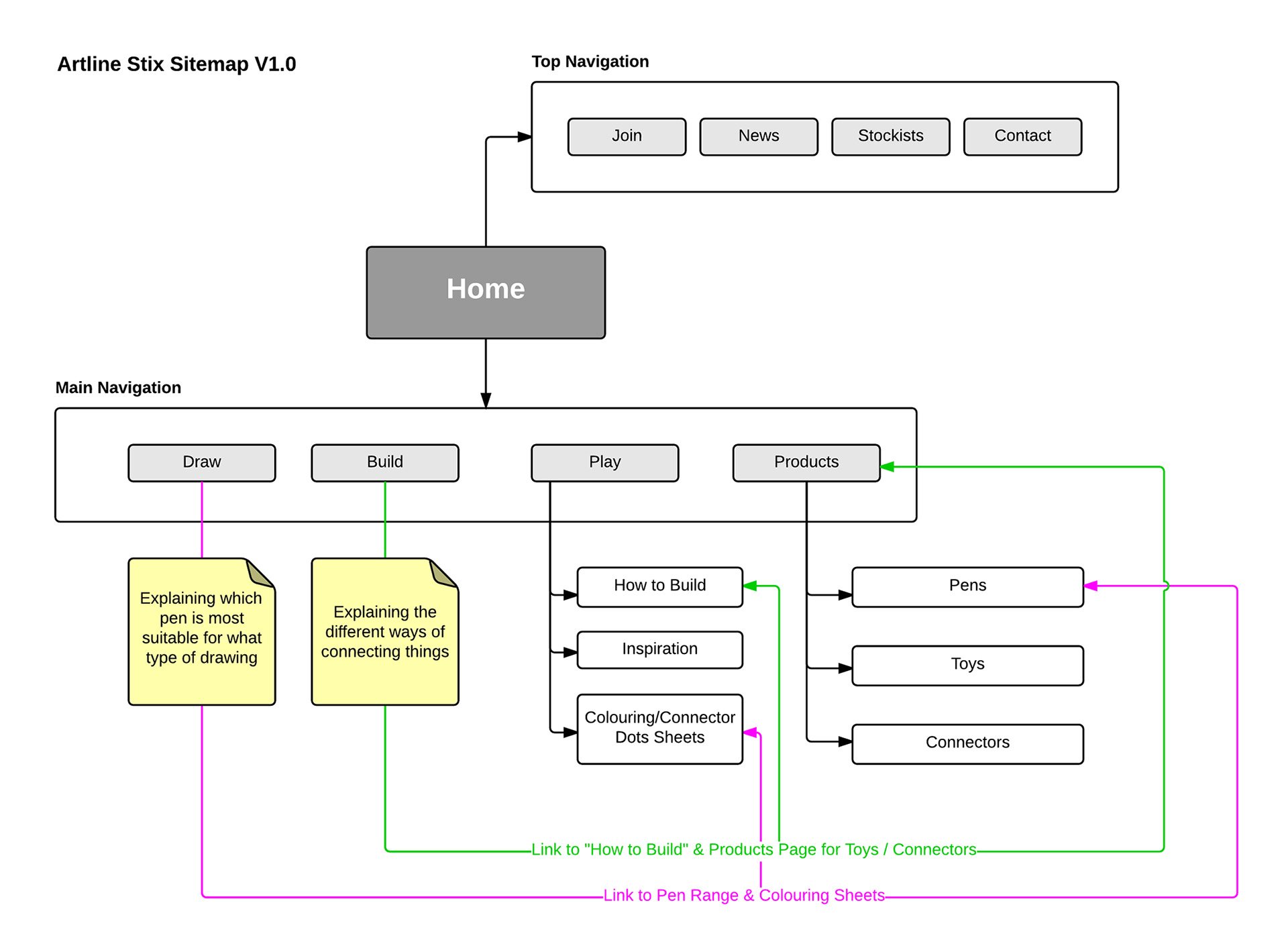
Based on Artline’s product development, a lot of material was developed to support parents and their children’s curiosity in the Artline Stix range. Product information pages showcased the full Artline Stix range and demonstrated how each of the components functioned. ‘How-to-build’ guides and activity sheets provided inspiration on how Artline Stix can be utilised to support the creative endeavours of children. We structured the website’s information architecture around the ‘Draw, Build, Play’ tagline to showcase this informative and creative material for customers.
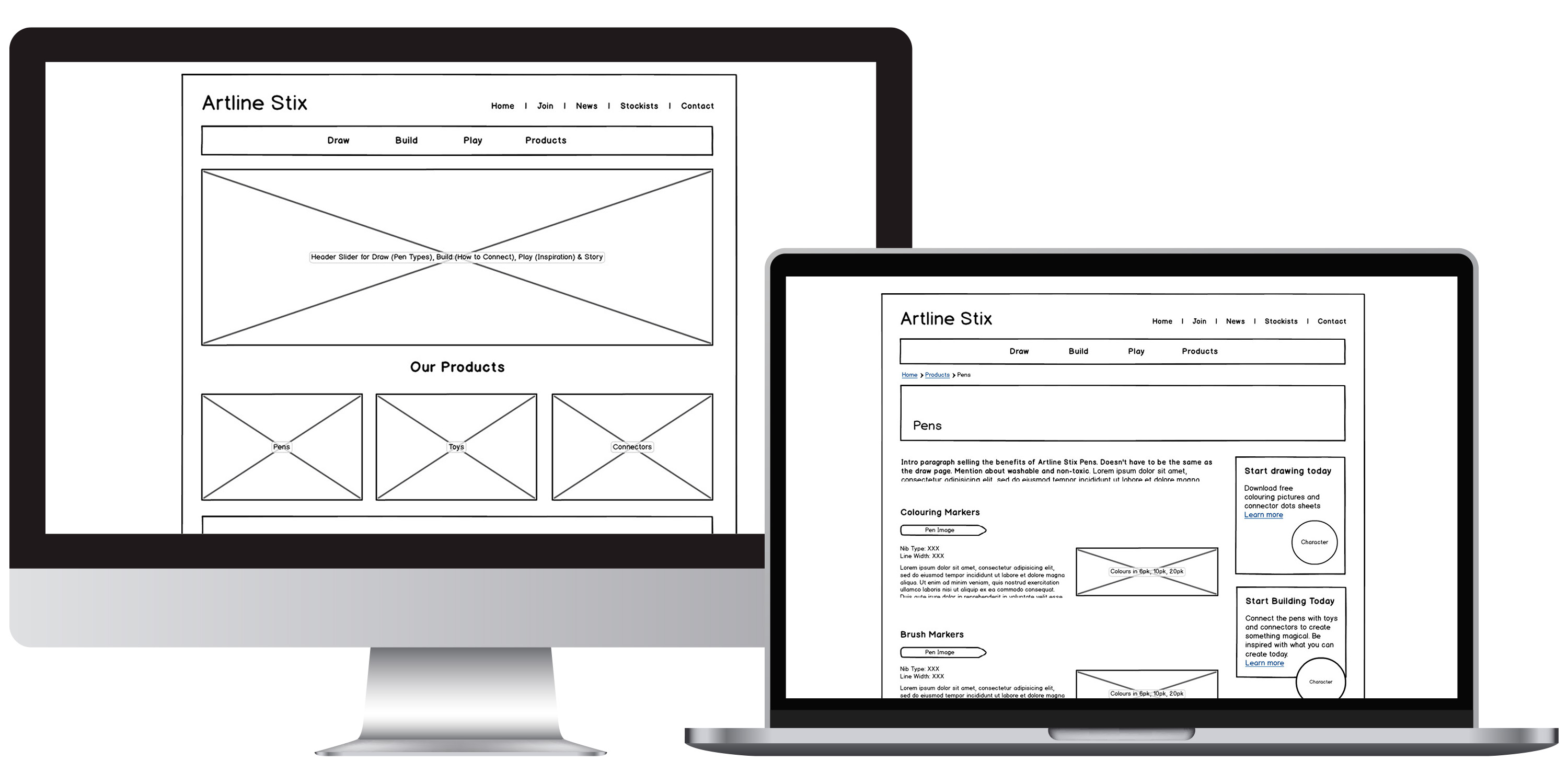
Building upon the website’s information architecture, I developed wireframes to test and refine the hierarchy of information. I collaborated with stakeholders to align on these structural foundations before moving onto high fidelity designs.
To align with the brand identity of Artline Stix, animated playful page headers were crafted in HTML/Javascript to add character and energy to the experience. I also implemented animated button hover states to visually allude to the way Artline Stix products connect together.
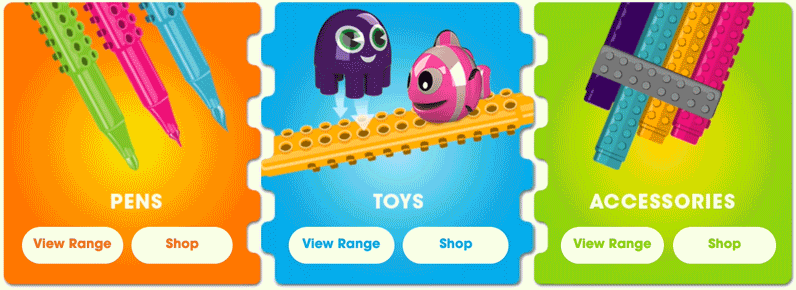
By extending the Artline Stix brand into the digital realm, the final website guides and inspires customers while strengthening the brand’s presence as a key differentiator within the children’s stationery and toy market.
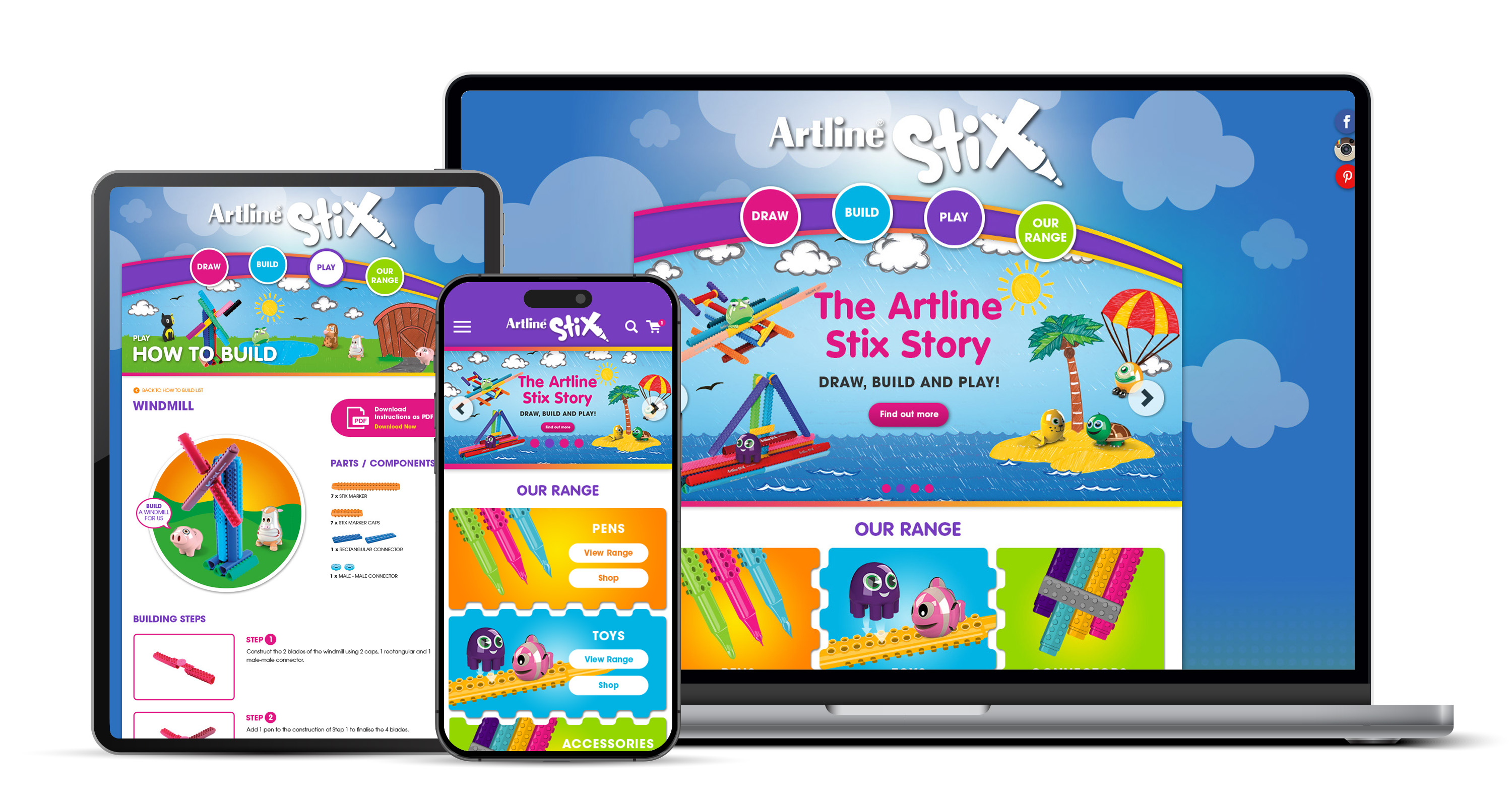
This project strengthened my ability to design and export web animations for development. I continue to apply this capability when collaborating with engineers on motion and interaction design.
As a legacy project, it reflects how UI patterns and accessibility standards have evolved over time, reinforcing the importance of continuous learning and iteration.
With greater investment, the experience could be enhanced through gamification mechanics such as creative challenges, collectible rewards, or AR interactions to further engage children and strengthen brand connection.